The Community Services Recovery Fund was a $400 million investment from the Government of Canada to support charities and non-profits as they focus on how to adapt their organizations for pandemic recovery.
From a volunteer to a summer student to now Associate Executive Director, Cheyenne Labrador has been involved with Mi’kmaw Native Friendship Centre in Halifax, Nova Scotia for several years.
The non-profit organization provides programming for Indigenous communities in urban areas across various sectors, including education, health, housing and justice. Over its 50-plus years of operation, the Friendship Centre has expanded from 10 programs to over 65, covering areas such as education, employment, legal services and beyond.

COVID-19 impact on Halifax’s Indigenous communities
The pandemic marked the first time that Mi’kmaw Native Friendship Centre had to close its doors, shifting instead to remote services.
“When you’re not in person, when the world is crashing and burning, we’re still here,” Labrador says. “We still have to support communities. How do we do that in a good way?”
The COVID-19 pandemic exposed significant gaps in access to healthcare in rural areas, with the medical system quickly becoming overwhelmed. In addition, social isolation from lockdowns led to an increase in mental health crises. A 2020 report showed that, despite easing lockdown from spring to summer, the levels of high anxiety and depression persisted across the country.
On top of this, Labrador says, “a lot of people were laid off,” meaning the Friendship Centre was working overtime to ensure clients were having their basic needs met. “There were a lot of gift cards given out so people could afford essential things,” she says.
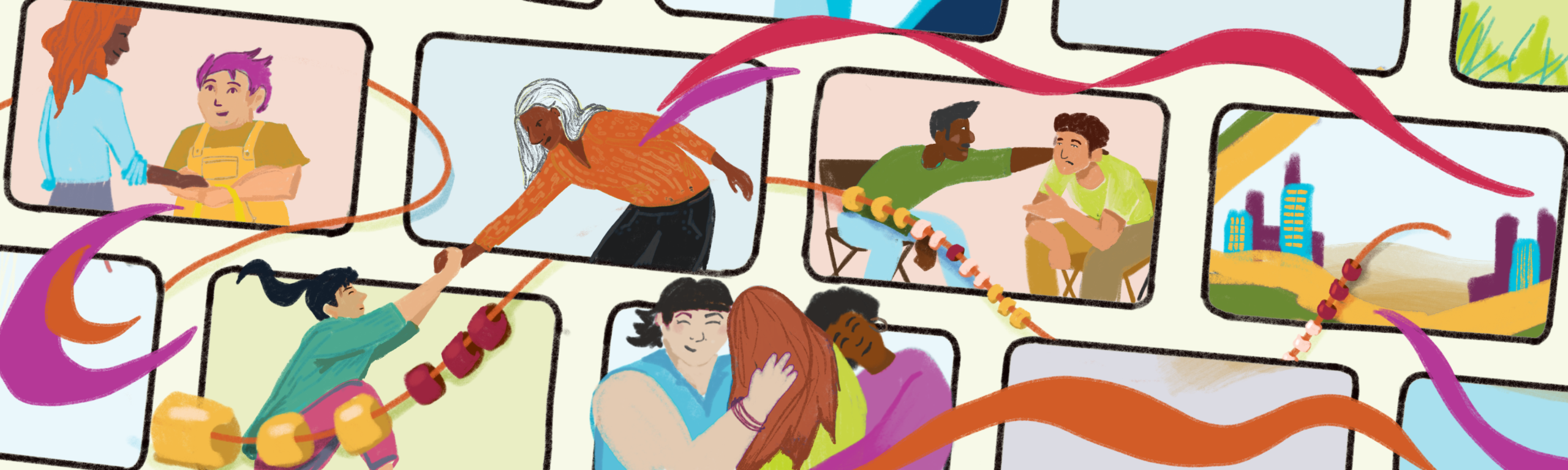
Beyond distributing gift cards, the Friendship Centre was among the first healthcare providers in Nova Scotia to set up vaccine clinics. The team also provided online beading workshops, offering a culturally meaningful way to stay connected during isolation.
“We don’t go at 4 o’clock and say ‘I’m done for the day,’” Labrador says, adding that the Friendship Centre’s front-desk secretary — who has been working with the team for 35 years — would even take phone calls from her home after-hours. “This is our community. It’s our family members out there: our sisters, our brothers, our cousins.”

CSRF funding helps the Friendship Centre expand its services
During this time, Labrador and her team applied for the Community Services Recovery Fund: a $400 million investment from the Government of Canada to support charities and non-profits in their pandemic recovery efforts.
With the funding, the Friendship Centre was able to hire more staff, including a program manager, an executive assistant, an admin team and HR department. The funding also allowed the team to implement mental health support for the staff, which helped them reduce burnout, Labrador says.
“Staff are feeling supported and are reaching out for those supports before they find themselves in a predicament where it’s harder to get out of that,” Labrador says. “We’ve seen changes in folks just being able to access mental health support.”
With more hands on deck, the Friendship Centre expanded its services to support clients facing homelessness, and increased its mental health services into a dedicated department. From the start of the pandemic to today, the Friendship Centre doubled its staff from 100 to around 200 people.
Labrador emphasizes that, with adequate funding, Mi’kmaw Native Friendship Centre’s team was able to look at different models of supporting the community. She says that, without funding like CSRF, those supports can’t be put into place: “all of us are working with our heads down to support people,” Labrador says. “We need resources to step back, take a look and say ‘how can we have a bigger look at things?”