
This is part of our Healthy Communities Initiative (HCI) series, showcasing how the $60 million investment from the Government of Canada is supporting communities as they create and adapt public spaces to respond to the new realities of COVID-19.
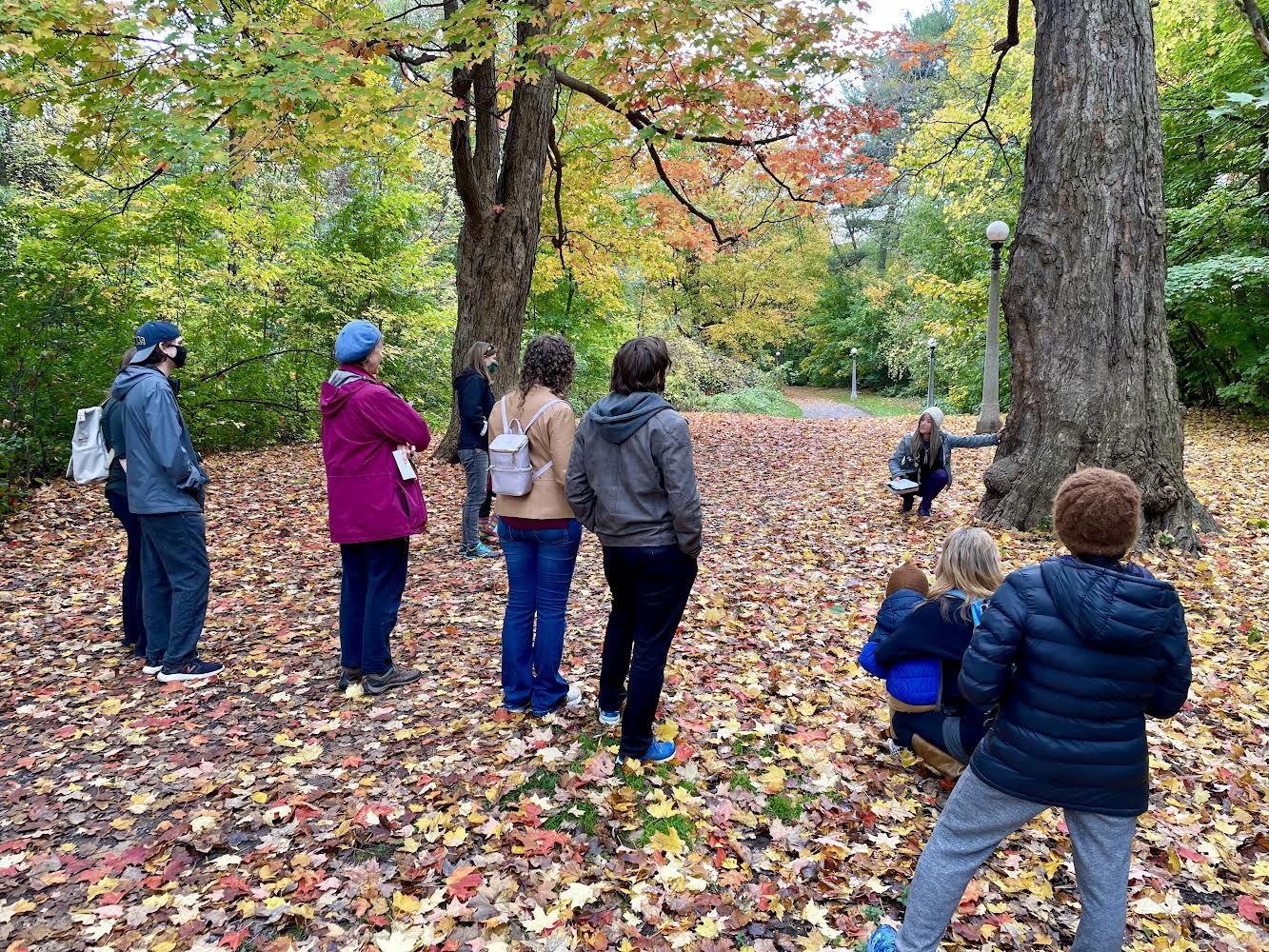
Lara Griffiths lives by Champlain Forest in a National Capital Commission(NCC)- owned stretch of forest in the middle of the city, with huge sugar maples and an abundance of native plants.
Oftentimes, you’ll find Griffiths strolling through the woods with her friends, Christine Earnshaw and Sharon Boddy. Where Earnshaw runs Tree Fest Ottawa, with a mission to protect forests while connecting folks with nature, Boddy and Griffiths are representatives of their local community groups, helping to protect local parks.
During the pandemic, Hampton Park Woods saw a sharp uptick in foot traffic. Griffiths says that, while it’s great that people love to visit the woods, “not everyone knows necessarily [how] to take care of a forest. [If we’re] trampling down all the regeneration, then that forest is simply not going to be able to grow up again.”
Griffiths, Earnshaw and Boddy wondered: how do you balance recreational use of a forest while also stewarding it, so it can grow for the next 100 years?
Securing $80,000 in funding from the Healthy Communities Initiative
After learning about the HCI grant in 2021, Griffiths and the team applied for funding for their project, ‘Healthy People, Healthy Woods’. The project would nurture healthy, equitable and resilient communities by creating much-needed connections during COVID-19 isolation, as well as reducing barriers to access for older adults and newcomers.
The project was successful, and Tree Fest Ottawa received over $80,000 in funding to launch community-based forest stewardship in three NCC-owned urban forests across Ottawa and Gatineau.
Thanks to the funding, Griffiths says, she was able to work on Tree Fest Ottawa full-time, digging deeper into outreach initiatives for equity and diversity.
“Folks who are interested in trees will go on these walks [already],” Griffiths says. “How do you reach the people who are a little further disconnected from nature, [but] who might certainly think, ‘that’s a fun thing to do on a Saturday afternoon?’”
She adds: “a lot of these stewards will be middle-aged white ladies like us. How do you diversify?”

Creating delight and community connection
Griffiths, who says she lives in a diverse neighbourhood with many newcomers, tapped into her network to host various events with different community groups. One of these was Contes Sous Un Arbre’: catered by La Teranga, a Senegalese restaurant in Ottawa, the event included a well-known Senegalese kora singer Zal Sissokho, and Marie-Eveline Belinga, a storyteller who specializes in children’s storytelling. All in all, over 200 community members came out to celebrate together.
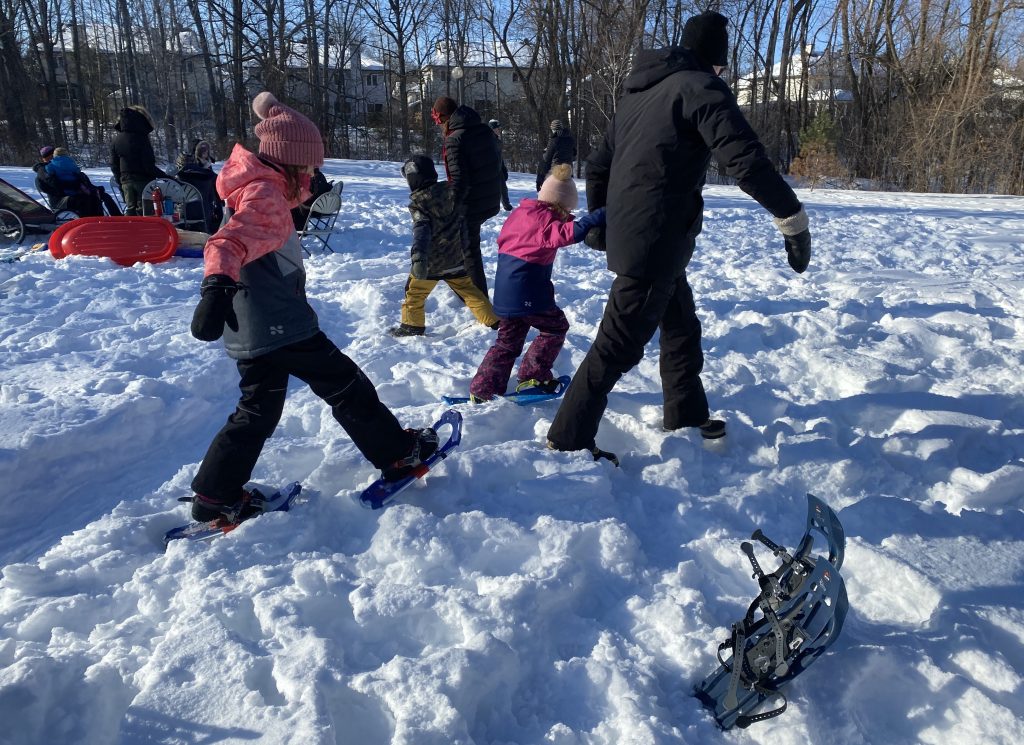
The team hosted Earth Day and winter festivities, too, Griffiths says. As well as this, “I hosted a walk every Tuesday for folks who were feeling very isolated, working from home or [being] retired.” With many walking groups pausing their activities during the height of the pandemic, Griffiths says her group was “a regular walk that people can count on.”
As well as offering a space to meet new folks, the walks offered a chance to rekindle and deepen past connections. During one of the Tuesday gatherings, Griffiths’s neighbour — an older man — unexpectedly ran into an old girlfriend. “[He was able to] forge some connections and opportunities, and he had such a wonderful time,” Griffiths says.
On the stewardship side, Tree Fest Ottawa also offered group activities like removing invasive species and planting native ones. “Smaller forests are often more susceptible to invasive species,” Griffiths explains. “[The activity] was a lot of fun because people like to get their hands dirty.”
The team also ran the Maple Festival in March of 2022, inviting community leaders from Kitigan Zibi to speak about the importance of the maple season for the Anishinabeg.
“Maple season was a time of gathering as a community and celebration of more plentiful times to come,” Griffiths says. “The Maple Fest really felt like it embodied that.”
Hosted in 2022, Maple Fest was one of the first events that Griffiths ran where people felt comfortable gathering in larger numbers. “We had 500 people there, and they just really appreciated the opportunity to finally come together.”
Building for the next generation
All in all, Tree Fest Ottawa ran almost 100 events in one year. Griffiths adds that the team often receives feedback about how great the events were, with people stopping them in the streets to say ‘thank you’.
“[Without HCI funding], a lot less would have happened, and not at the scale that [it did] — I don’t think it would have filled people’s needs for community,” Griffiths says.
She adds that Healthy People, Healthy Woods proved the impact that Tree Fest Ottawa can have, but with funding ending after one year, the possibilities for future iterations are limited.
“It would be wonderful to be able to build on what we’ve accomplished and all the lessons learned,” Griffiths says. “It would be wonderful if this was the sort of thing we prioritized in our society. I think we would all be better off for it, really.”