This is part of our Healthy Communities Initiative series, showcasing how the $60 million investment from the Government of Canada is supporting communities as they create and adapt public spaces to respond to the new realities of COVID-19.
In Dartmouth, the offices of the Conseil communautaire du Grand-Havre (CCGH) are located in a historic neighbourhood. It’s a symbolic place that witnessed the birth of Nova Scotia’s first community school centre in the early 1990s. “It was the heart of the Francophone Acadian population for many years,” explains Mario Noury, Executive Director at CCGH.
Today, in addition to the community centre—which houses a gymnasium, an auditorium and a library—there are two schools and a daycare. The lively neighbourhood is also charming; it’s surrounded by green spaces and sits at the edge of a large forest.
In 2020, a desire emerged within the community to modernize and diversify the use of outdoor spaces. And so, the revitalization of the Carrefour du Grand-Havre community park school began.
By and for the community
The mission of the CCGH is to support the Francophone and Francophile Acadian community by developing partnerships and implementing programs and services. To show some love to the land between the community centre and École Bois-Joli, the CCGH set up a school advisory committee composed of students, parents, teachers and community members. Its mission was to examine stakeholders’ needs and propose possible solutions for redeveloping the outdoor space.
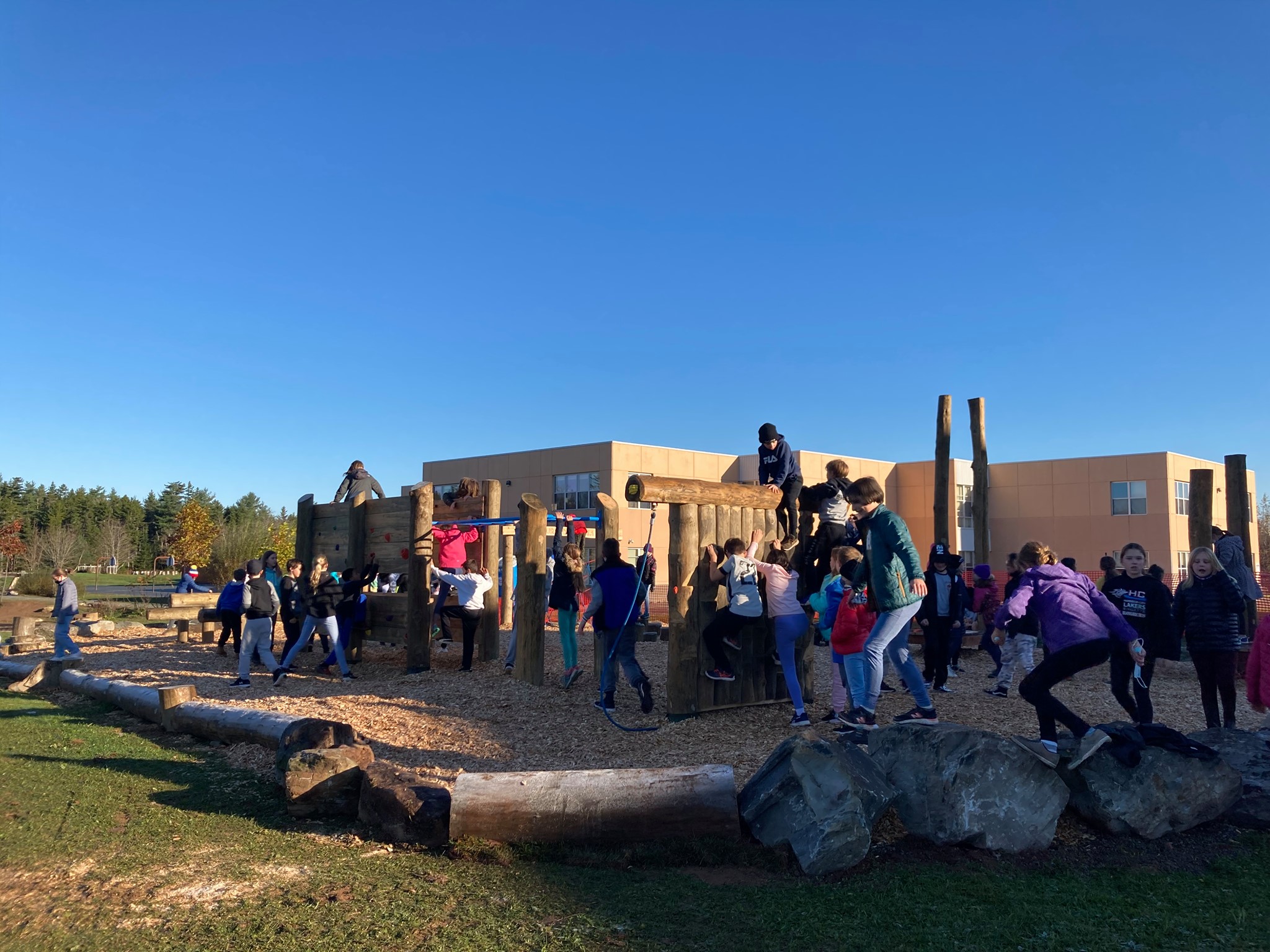
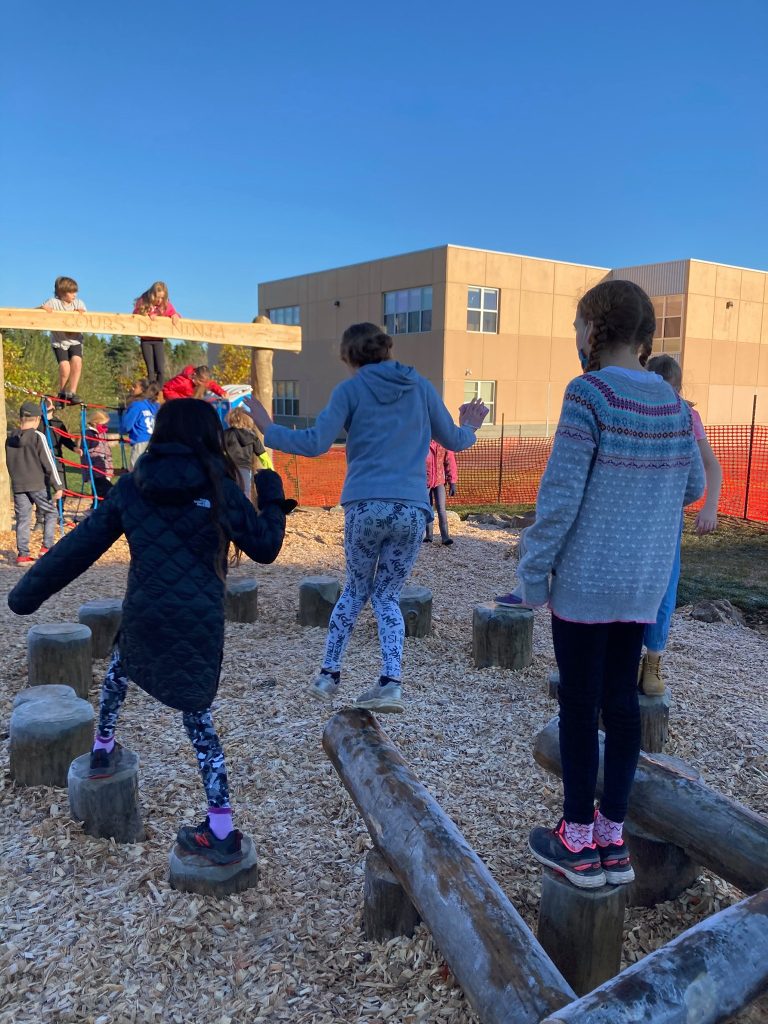
They agreed that a dedicated place for physical activity was needed. Very quickly, Éric Shantz, a physical education teacher at Bois-Joli, shared his vision. From a professional standpoint, he proposed the idea of a playground-slash-obstacle-course that works the upper body and helps with balance. The committee was enthusiastic and continued discussions.
Inspired by Éric’s idea, the project started to take shape. It was decided that one part of the space would be turned into a playground for physical activity, and another into an outdoor classroom—that is, a collaborative space for groups of all ages.
Nature and safety
The time came for partners to seek funding and contact development firms. They also needed to assess costs and review different proposals for enhancing the outdoor space.
Through the Community Foundation of Nova Scotia, the CCGH heard about the Healthy Communities Initiative. The initiative would fund nearly 50% of the project budget—a total of $110,000. The remainder was covered by the Fondation communautaire du Grand-Havre, the school advisory committee and the Province of Nova Scotia, among other contributors.
The partners adopted “nature” and “safety” as the watchwords for developing the space. The development firm needed to create a playful environment that aligns with Grand-Havre’s green spaces and that younger and older generations can safely enjoy. Though the buildings were made of concrete and dated back to the 1990s, the committee was keen on aligning the new space with the surrounding forest.
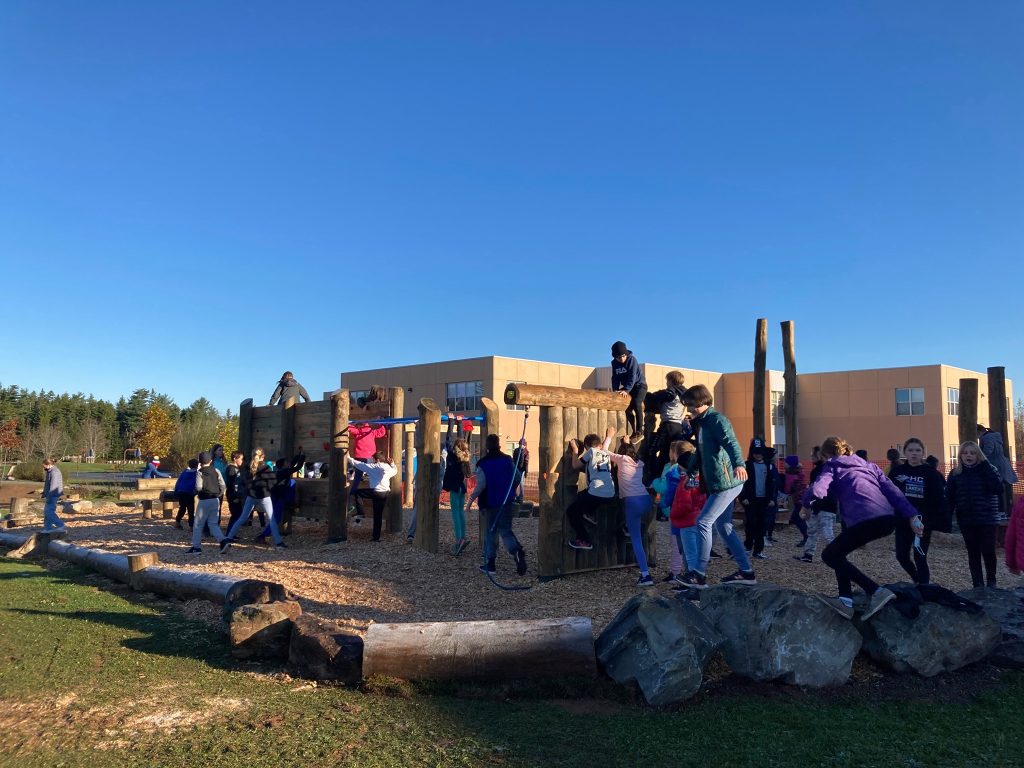
A local firm ultimately accepted the challenge, choosing wood as the main material. The outdoor classroom opened in the spring of 2021, and the playground in November of the same year.
A space for us!
The COVID-19 pandemic unfortunately dampened plans of a grand opening, but this didn’t dissuade the public from visiting—on the contrary! “We have to look at it through the lens of the pandemic,” emphasizes Mario. “We were looking for solutions to bring our communities together […] Schools had become a strange, limited-access place where everything had to be disinfected.” It’s during COVID-19 that the outdoor classroom became a place where students can learn while breathing clean air mask-free.
Spaces like these are more than just installations—they form bridges between communities, including the daycare, schools, and community centre. During the week, the partners organize various activities. On weekends, families can also enjoy the space peacefully.
Mario has fond memories of the project’s implementation. He refers to it as “a great example of an equal partnership, with everyone playing their part and contributing.” For Mario, the strong relationship between stakeholders was a decisive factor in the project’s success. It’s why today the space is shared organically without scheduling conflicts. Everyone finds their place, be it summer or winter (unless there’s a huge storm, of course!).