

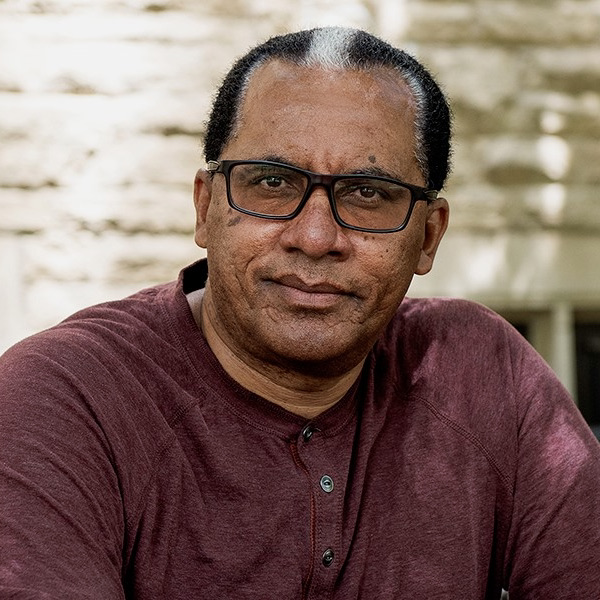
With a degree in Political Science, focusing on postcolonial studies, Rudi Wallace — Hamilton Community Foundation’s VP of Grants and Community Initiatives — has been working in the philanthropy and non-profit sector for years.
Explaining what drew him to the sector, Wallace says, “both my parents came from the developing world, and lived through decolonization in independence movements,” Wallace says. “My ancestry is from indentured laborers from India and China, taken to work on the sugarcane plantations in Guyana and Mauritius, once the transatlantic slave trade had ended.”
Speaking to the complexities of colonization and identity, Wallace adds that his ancestry includes Portuguese and Dutch settlers to Guyana. He says that, in his family, there is a “deep commitment to self-determination, decolonization and anti-racist, anti-oppressive practice.”
That commitment has led Wallace throughout his work — and it’s the same type of commitment that led to the creation of the recent study, ‘Shifting Power Dynamics: Equity, diversity, and inclusion in the non-profit sector’.
The study — proposed and advocated for by the Network for the Advancement of Black Communities (NABC), and created through the Equitable Recovery Collective, consisting of several organizations, including Community Foundations of Canada — collected survey responses from 1,655 charity and non-profit leaders in 2022. Organizations were grouped into three categories: white-led organizations, BIPOC-led organizations, and organizations led by individuals from other underrepresented groups.
For community foundations to really advance EDI, “we need to unpack that this sector is based in white supremacy and colonialism,” Wallace says. “That’s a super challenging discussion to have with not only staff and boards, but also donors who are wonderful folks who do amazing work.”
Major findings include that, while most non-profit leaders support equity, diversity and inclusion (EDI), far fewer will pursue EDI with deep intentionality. Meanwhile, despite facing far greater barriers, organizations led by BIPOC people do more to advance EDI; in fact, where 84% of BIPOC-led organizations highlighted EDI in their organizational values, only 69% of white-led organizations did the same.
How did we get here?
The study shows that funders have a vital role to play in advancing EDI. Reflecting on the study, Wallace says that, amongst funders, EDI can sometimes turn into a buzzword, instead of an important framework for major social change.
“You can’t have this [EDI] conversation without having a very challenging conversation around where [philanthropic] dollars have come from — often centered in colonialism, oppression, dispossession of land and resources of Indigenous communities,” Wallace says.
For community foundations to really advance EDI, “we need to unpack that this sector is based in white supremacy and colonialism,” Wallace says. “That’s a super challenging discussion to have with not only staff and boards, but also donors who are wonderful folks who do amazing work.”
According to the ‘Shifting Power Dynamics’ study, the very first step to advancing EDI is for teams to have those exact kinds of conversations.
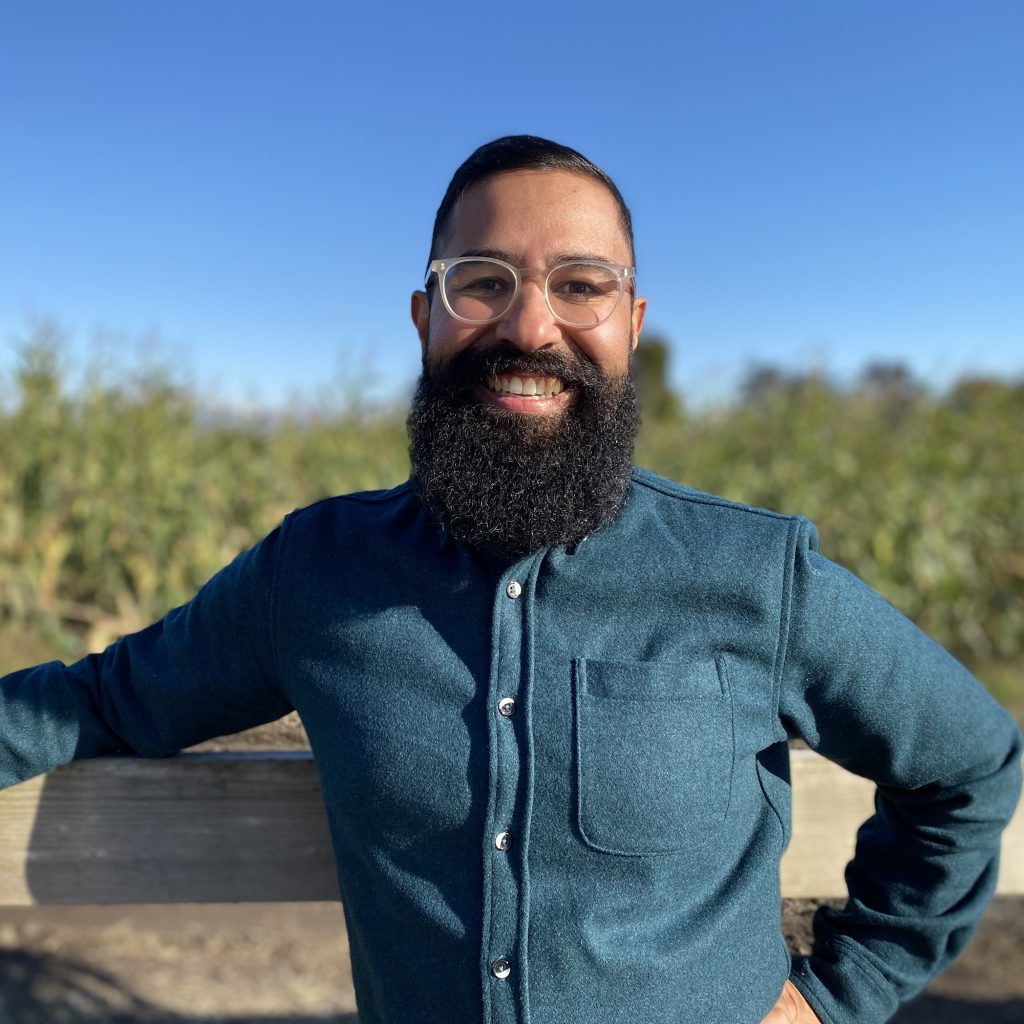
“Look at processes that are attached to your relationship with grantees, your grant-making process, your governance or HR,” melles says. “How is equity, diversity and inclusion embedded in what we’re doing?”
“There are some really concrete recommendations for funders, including community foundations [in the study],” says amanuel melles, Executive Director and co-founder of NABC — again, the organization which first advocated for the study — and which focuses on systems transformation to help organizations drive positive outcomes for Black communities. “That [EDI work] cannot happen if we [funders] don’t enable it.”
Key takeaways for community foundations
According to melles, for EDI work to happen, there must be enabling structures in place — things like committees and working groups, so no-one is working on EDI off of the side of their desk, without adequate resources.
He also adds that it’s important for organizations to have comprehensive strategies in place for funding Black, Indigenous and racialized-led organizations — and to ensure that monitoring systems are set up to track progress, as part of an internal equity audit.
But before all of that, melles advises community foundations leaders to “be introspective, look inside. If you have done the internal work, I think you’re going to be an effective partner.”
From there, a leader can fully assess their organizational culture. “Look at processes that are attached to your relationship with grantees, your grant-making process, your governance or HR,” melles says. “How is equity, diversity and inclusion embedded in what we’re doing?”
In Canada, over 10,000 public and private foundations steward over $120 billion in assets. Pointing to the Foundations for Black Communities’ ‘Unfunded: Black Communities Overlooked by Canadian Philanthropy’ report, Wallace says that Black communities receive 0.01% of philanthropic funding dollars, while Indigenous communities receive just over 1% of grants in Canada.
“We can talk about equity benchmarking until the cows come home, but until our Boards, senior leadership, staff and volunteers shift [their] ways of thinking, we’re going to perpetuate the same harms,” Wallace says.
For Wallace, EDI means seeing a vast redistribution of wealth and resources “to marginalized and underserved communities who have been historically disadvantaged or oppressed by our very institutions,” he says. “Proof will be in the pudding in terms of how foundations invest their dollars from their endowments.”
Leading by example
Despite the major, sector-wide shifts that need to happen, Wallace acknowledges that good work is already being done.
For example, 25% of Hamilton Community Foundation’s endowment funds are placed or committed to impact investments, spanning initiatives like green tech, affordable housing, small businesses and more.
Wallace says that, internally, Hamilton Community Foundation conducts an equity audit every five years. It also implemented the I4DM Definitional Matrix, a tool developed by The Circle on Philanthropy and Aboriginal Peoples in Canada to support the self-determination and sovereignty of Indigenous peoples.
In collaboration with its partners, Hamilton Community Foundation is also in the process of co-developing a Declaration of Action on Truth and Reconciliation that is aligned with the Truth and Reconciliation Commission’s Calls to Action and the United Nations Declaration on the Rights of Indigenous Peoples, alongside an implementation plan.
“We’re in the validation process with Indigenous partners,” Wallace says. “Our hope is to have the [Declaration of Action on Truth and Reconciliation plan] in place as a public-facing document, so that we can be held accountable for what we say.”
In the future, melles hopes to do a follow-up study to ‘Shifting Power Dynamics’, to see the progress that’s been made by philanthropic organizations such as Hamilton Community Foundation.
“I’m hoping that we will see more and more management and leadership in the sector taking this work really seriously,” he says. And when that happens, “my hope is that we’re not reducing the advancement of equity, diversity and inclusion to just ‘stuff to do’ — you know, policies and practices and training and protocols,” he says. “This has a direct consequence on the lives of children, youth and families in our communities.
melles is hopeful; he says that the non-profit sector is a huge component of what Canada is today — in 2022, it made up 8.4% of the country’s total GDP.
“If we’re able to mobilize this ‘giant’ [i.e. non-profit sector] by showing the beauty and the strength in our diversity, the impact of this giant, so to speak — it’s huge,” melles says.